
Ongoing military conflicts in Iran and Ukraine have underscored deep tensions in global geopolitics and generated concerns by global investors and policymakers from the local to federal levels. But with significant new R&D spending on the horizon by the Pentagon, there is opportunity for North Carolina to boost the impact of its defense economy. Those prospects, and their benefits for Wake Forest, are evident in North Carolina’s recently passed state budget.

NC State Representative Mike Schietzelt (R-35)
“We have many of the ingredients here to support a robust defense contracting industry that can bring billions in federal investment,” says state Representative Mike Schietzelt (R-35).
With its massive defense bases, North Carolina is considered one of the nation’s most military-friendly states. The state ranks 4th in the U.S. for uniformed military personnel, behind only California, Virginia and Texas, according to Pentagon data. But despite the state’s renowned research universities, North Carolina holds a lackluster position when it comes to military-related R&D and testing activities, barely breaking the Top 20. “Right now, we’re getting about $200 million a year in defense research,” Rep. Schietzelt points out. “We should be getting $2 billion.”
Though Congress controls the federal purse, conversations about defense innovation and national security are increasingly commonplace in the halls of the North Carolina General Assembly. Rep. Schietzelt led the way in establishing the National Security Technology & Innovation Caucus, a bipartisan, bicameral panel he now co-chairs with state Senator Jay Chaudhuri, a Wake County Democrat, and two eastern North Carolina legislators. The group has set its sights on enhancing the state’s ability to capture more defense R&D dollars. “The states that are doing this well have developed incentives and shared infrastructure,” Schietzelt explains. “We need to do that in North Carolina.”
The state has a solid track record on basic research but suffers from a deficit in moving new discoveries into products available on the defense market. “We already have the innovation here. We lose out when it comes time to go from innovation to commercialization,” Schietzelt says. He cites a “valley of death” that occurs when government entities dabble with new technologies for a few years before suddenly requesting immediate manufacture of massive orders, leaving small firms in an especially disadvantageous position.
Collaboration and shared infrastructure can help overcome this, and that’s where the Wake Forest-based Wireless Research Center (WRC) can play a key role. The current state budget allocates $500,000 to the WRC to support the development of a shared-access, secure research infrastructure. “WRC can help coordinate all these pieces that will allow the industry to flourish,” Schietzelt says.
The N.C. General Assembly’s grant to the WRC could be a significant step in positioning North Carolina as a top destination for defense research, tech transfer and advanced manufacturing. WRC’s proven record of success with advanced communications, wireless systems, quantum technologies and other “dual-use technologies” (i.e., those possessing both military and commercial applications) places Wake Forest at the heart of the state’s strategy.
Founded in 2010, WRC celebrated its 15th anniversary a year ago, looking back on a storied legacy of support for innovation and entrepreneurship. Among its accomplishments was development of the “Internet of Things” (IoT) and the deployment of 5G cellular technology. In 2024, the U.S. Defense Advanced Research Projects Agency (DARPA) selected WRC as one of five national technology accelerators to support next-generation technologies for civilian and military use.
The funding also establishes a foundation for long-term infrastructure development designed to attract future federal investment, private capital and defense industry activity throughout the state. The appropriation will support the continued development of “WRC 3.0,” a statewide innovation ecosystem designed to connect government, academia, entrepreneurs, industry and investors through shared, secure R&D infrastructure.
WRC President David Whitmire says the $500,000 grant “represents much more than an investment in facilities. It represents North Carolina’s commitment to becoming a strategic partner in America’s defense innovation ecosystem.” Whitmire commends the General Assembly’s recognition that creating “environments where government, universities, entrepreneurs, industry and private capital can securely collaborate” will sharpen North Carolina’s competitive edge.
General Assembly action comes as the U.S. Department of War embarks on an historic upscaling of defense industrial-base initiatives. The Pentagon, for instance, recently announced $10 billion for material production and innovation infrastructure in Pennsylvania alone. WRC’s reputation at the federal level puts the organization in a pivotal position to create a shared classified workspace for the Research Triangle that can bring regional players together in a secure space.
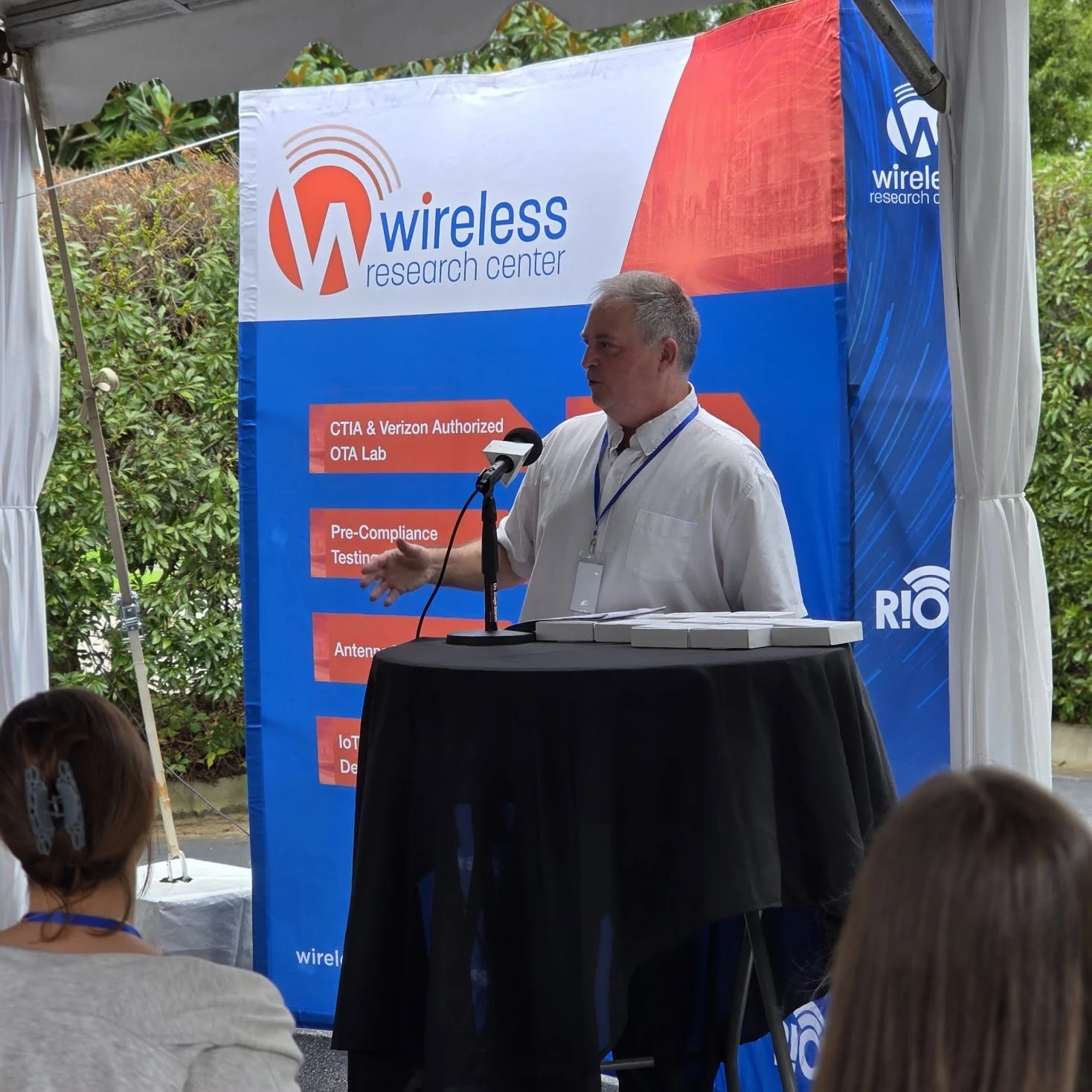
Gerald “Gerry” James Hayes, Ph.D.
“Every major innovation ecosystem begins with a deliberate investment in shared capability,” said Gerry Hayes, WRC’s Founder and Chief Scientist. “This positions North Carolina to compete for the industries that will define the next generation of economic growth and national security. We believe this investment will catalyze substantially larger public and private investments that position North Carolina as a leading center for secure technology development,” Hayes says.
Jason Cannon, President of the Wake Forest Business & Industry Partnership, suspects the state’s $500,000 investment might be only the beginning. “There is a major strategic and structural shift in U.S. national security – these aren’t just a few tweaks to our defense programs,” Cannon says. “It will have very positive consequences for states and communities that are thinking ahead and putting the pieces in place.” Wake Forest, with its proximity to both research universities and military bases, is poised to be a player in this emerging order. “Combine that with the presence of a proven center of excellence like the WRC and the bold vision coming from Rep. Schietzelt and other leaders, and the Town is positioned to compete – and win – more than its share of the benefits.”