
Innovation often brings to mind large corporations with expansive research teams and cutting-edge technology. In Wake Forest, however, innovation can be found inside a locally owned Downtown business that continues to put relationships first.
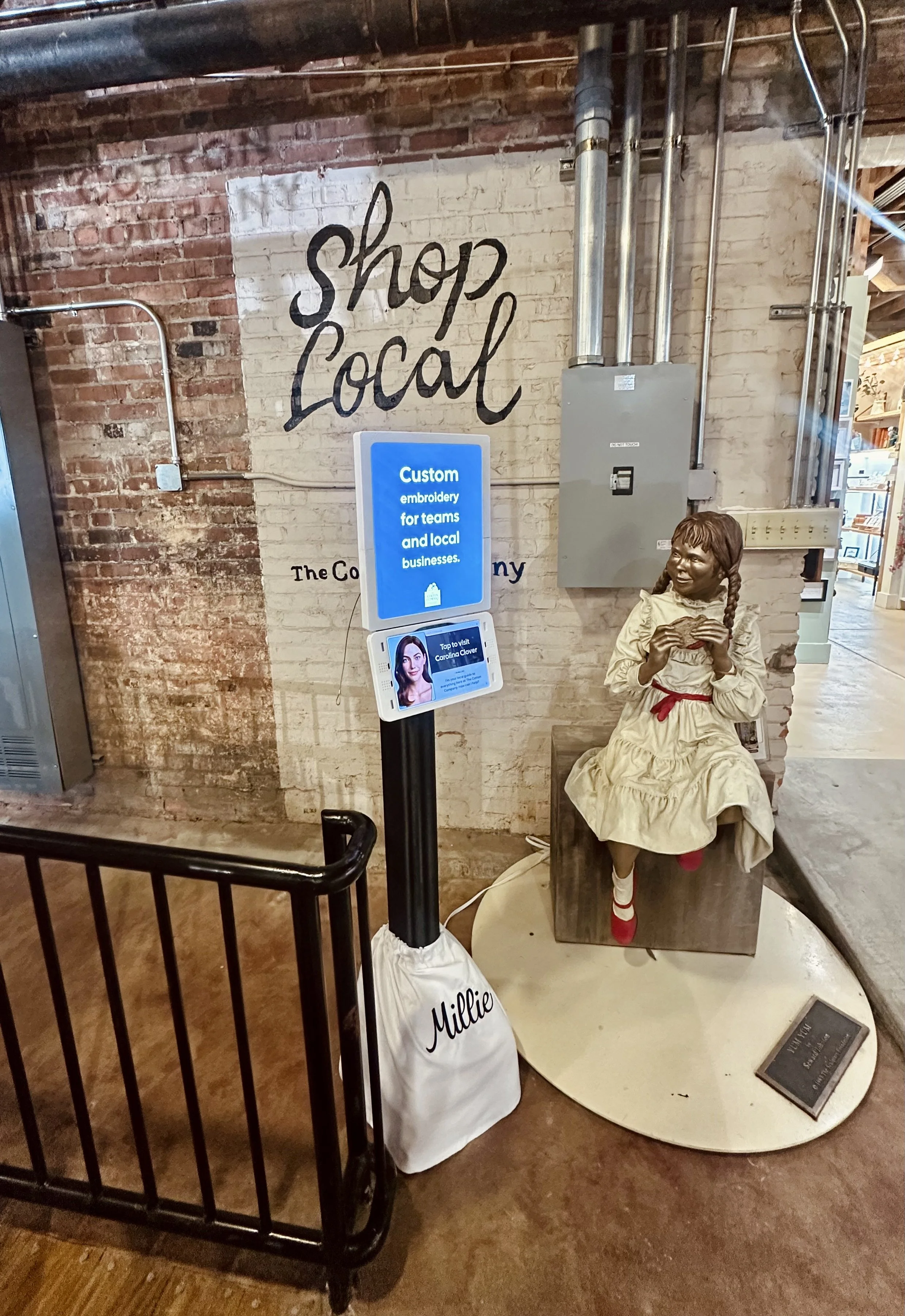
The Cotton Company has introduced "Millie," an artificial intelligence assistant designed to answer questions, share stories, and help customers navigate the store. While the technology itself is impressive, owner Elizabeth Johnson sees Millie as something much more practical. "Millie is an AI chatbot with a physical presence right here in our store," Johnson said. "Visitors can walk up, ask her questions, and have a conversation just as they would with a person."
The idea initially caught their attention because it was new and engaging. Soon, Johnson and store manager Marissa Shattuck realized Millie could become much more than a novelty. She could help strengthen the customer experience while giving their staff more time to focus on personal service. From explaining how to become a vendor to sharing the history of The Cotton Company and Downtown Wake Forest, Millie now handles many of the routine questions staff answer dozens of times each day. That shift allows employees to focus their attention where it matters most. "We see AI as a tool that enhances hospitality, not replaces it," Johnson said.
For a locally owned business where every team member wears multiple hats, even small efficiencies can make a meaningful difference. Rather than repeatedly answering the same questions, employees have more opportunities to help shoppers find the perfect gift, beautifully wrap a special purchase, or simply welcome someone who’s walking through the door.
Interestingly, one of Millie's biggest impacts wasn't something the team anticipated. "One of the biggest surprises has actually been how much our own staff has learned from her," Johnson said. "We loaded Millie with information about The Cotton Company's history and the history of Downtown Wake Forest, and she's become an unexpected learning resource for our employees as well as our customers."
That investment in knowledge has created another benefit. As employees become more familiar with the stories behind the business and the community, they are better equipped to share those stories with visitors. Customers have embraced the new addition with plenty of curiosity. "People are naturally curious, so many customers simply walk over to see what she can do," Johnson said. "Children especially enjoy asking Millie questions and hearing stories about the building and our history."
What begins as curiosity often turns into a longer visit, giving shoppers more time to browse and discover the unique products offered by local vendors throughout the store. Despite the excitement surrounding artificial intelligence, Johnson is quick to address one of the most common concerns surrounding the technology. "Personal service has always been at the heart of The Cotton Company," she said. "Millie hasn't replaced anyone, nor was she intended to."
Instead, Millie serves as another member of the team by answering repetitive questions, helping train employees, and sharing information about the store, its vendors, and Wake Forest's history. "The goal isn't fewer human interactions, it's better ones," Johnson said. "Millie doesn't replace the human touch, she protects it."
Although Millie has only been part of The Cotton Company for about a month, the business is already uncovering benefits beyond customer engagement. By reviewing the questions customers ask, the team gains valuable insight into what shoppers are looking for. Those trends can then be shared with vendors, helping them better understand customer interests and improve their offerings.
Johnson believes that approach reflects Wake Forest itself, a community that continues to grow while maintaining the relationships that make it feel like home. "I think Wake Forest has always been a community that embraces new ideas while valuing personal relationships," she said. "Millie reflects that perfectly."
Jason Cannon, President of the Wake Forest Business & Industry Partnership (WFBIP), believes examples like The Cotton Company demonstrate that innovation isn't limited to large companies or technology firms. "Wake Forest has never been a community that's afraid to embrace new ideas, but we've always done it in a way that keeps people at the center," Cannon said. "The Cotton Company is showing that innovation doesn't have to come at the expense of hospitality. When it's implemented thoughtfully, technology strengthens relationships and experiences that make shopping local so unique and worthwhile."
As Wake Forest continues attracting new residents, businesses face increasing competition from national retailers, online shopping, and changing customer expectations. Johnson believes local businesses can remain competitive by adopting technology thoughtfully while staying grounded in the personalized offerings that set them apart. "We believe technology should enhance hospitality, not replace it," she said. "If AI allows us to answer questions faster, serve customers better, and learn more about what they're looking for, then it helps us remain competitive while preserving the personal experience that makes shopping local so special."
As Millie continues to evolve, The Cotton Company plans to expand her capabilities, including allowing her to answer phone calls so customers can receive immediate answers to common questions even when the store is closed.
For other small business owners considering artificial intelligence, Johnson offers simple advice. "Start with a specific problem you're trying to solve rather than adopting AI just because it's the latest technology," she said. "AI doesn't have to replace people. I think its greatest value is helping your team spend more time doing what only people can do: building relationships, solving problems, and creating memorable customer experiences."