The 6th Annual Economic Development Forum brought over 200 Wake Forest leaders, partners, and community voices together for a thoughtful look at growth, opportunity, and the town’s path forward.
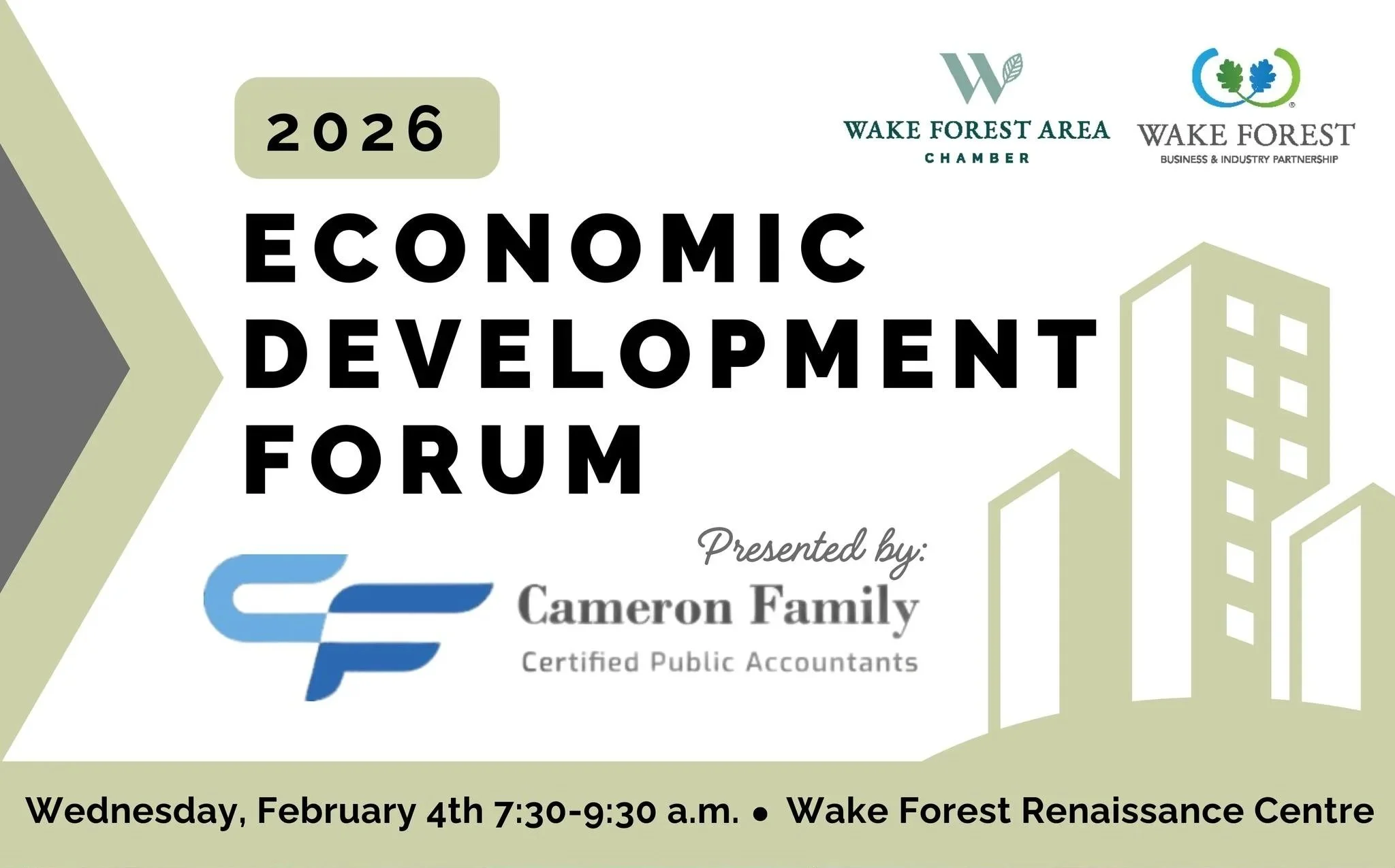
Presented by Cameron Family CPAs and co-hosted by the Wake Forest Business & Industry Partnership, and the Wake Forest Area Chamber of Commerce, the Economic Development Forum has become a cornerstone Town event—reflecting both where Wake Forest stands today and how intentionally it is planning for the future. This year’s gathering marked not only the Forum’s sixth anniversary, but also a renewed energy and a clear sense of direction.
The morning opened with a welcome from Tisha Baker Lowe, Interim President of the Wake Forest Area Chamber of Commerce, who set a welcoming tone. Elected officials in attendance were introduced, reinforcing the importance of connection, visibility, and shared leadership across the community.
Ryan Hutchinson, President of Southeastern Baptist Theological Seminary, delivered the invocation, focusing on wisdom and discernment as Wake Forest continues to grow and evolve.
Mayor Ben Clapsaddle followed by recognizing the many organizations and partners whose collaboration makes the Forum and the town’s continued progress possible. His remarks reinforced a theme that carried throughout the morning: Wake Forest is strongest when its leaders, institutions, and community are working together.
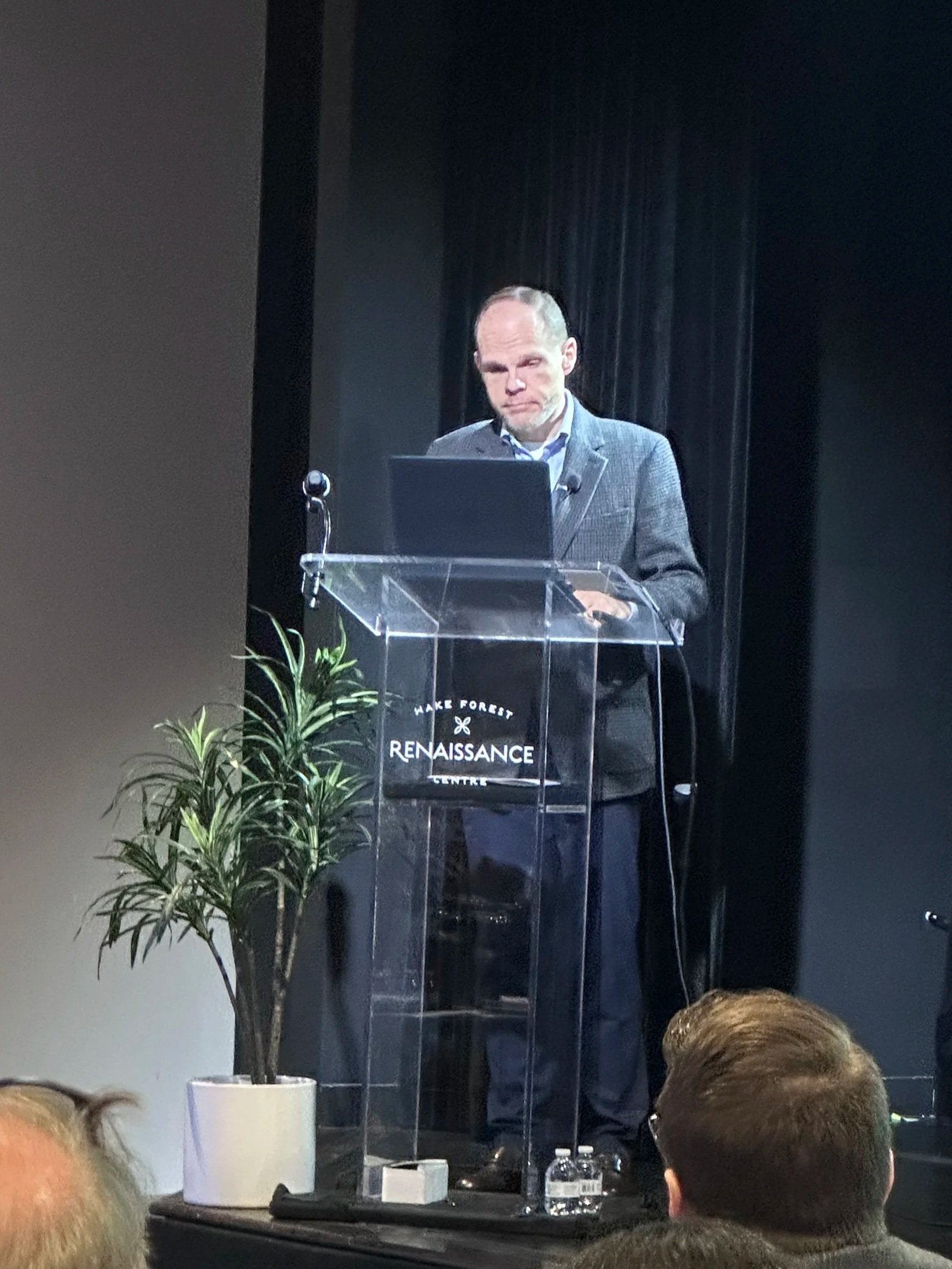
Arts and culture continue to play an important role in Wake Forest’s economic story. Amy Pridgen, Director of the Wake Forest Renaissance Centre, shared that the venue now hosts more than 400 events each year, with demand continuing to rise. A feasibility study is underway to explore a future arts facility that could include a state-of-the-art hall, studio, and theatre—supporting Wake Forest’s growing cultural presence while contributing to community vitality and economic growth.
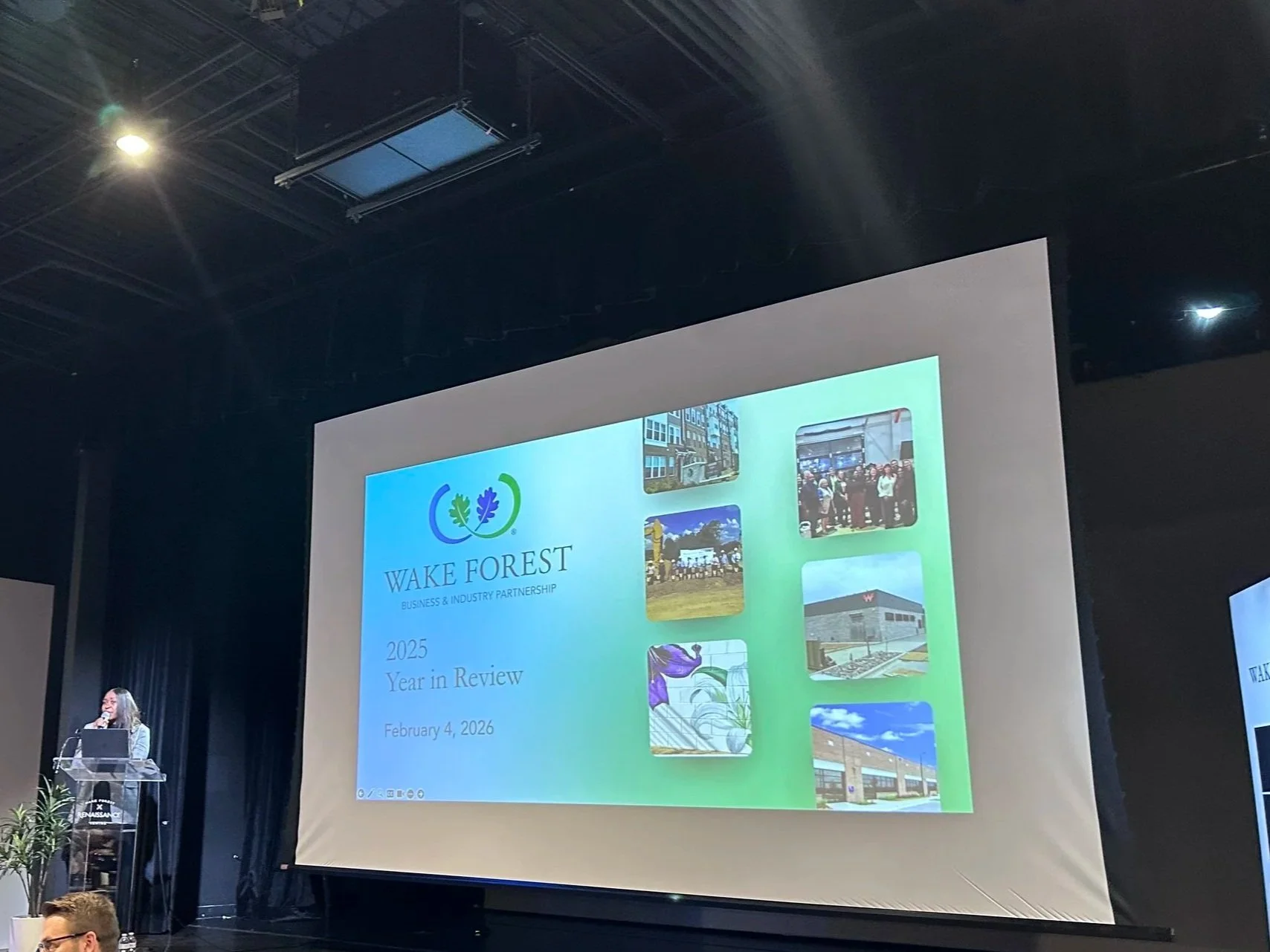
The ED Forum kicked off with a comprehensive year-in-review led by Jason Cannon, President of the Wake Forest Business & Industry Partnership. This marked Cannon’s sixth Economic Development Forum and his tenth year leading WFBIP. During his remarks, Cannon highlighted Wake Forest’s continued growth, noting that the unofficial population estimates from the Town of Wake Forest Planning Department reached 64,618 residents within its municipal limits as of January 1, 2026.
Key data underscoring Wake Forest’s continued momentum and influence within the Triangle region was highlighted in the printed 2026 Community Profile. That story was further brought to life through a new animated Community Profile created by Roseland Pictures, reimagining Wake Forest through a fresh, cinematic lens—with a tone and visual confidence inspired by Tulsa King. Together, the profiles spotlighted several standout indicators of the town’s growth and forward momentum, including:
Wake Forest population up 354% since 2000
86% of residents under the age of 65
Named America’s Most Desired Suburb for 2025 by Travel + Leisure
Entrepreneurship remains a central pillar of Wake Forest’s economic strategy. Since 2017, WFBIP has championed innovation through Wake Forest Founders (WFF) while collaborating with The Loading Dock - Wake Forest and the Wake Forest Area Chamber of Commerce – together known as The Collective – providing consistent support for entrepreneurs and small businesses at every stage of growth.
A key highlight of WFF is the Entrepreneurial Accelerator, led by Dr. Tim Flood of the UNC Kenan-Flagler Business School. Now completing its fourth cohort, the program has awarded more than $40,000 to date and offers mentorship, peer learning, and hands-on guidance for Wake Forest small business owners preparing to scale.
The Loading Dock - Wake Forest recently celebrated its fourth year of operation, serving more than 350 members across a wide range of industries from its White Street location. The space continues to function as a collaborative hub for remote workers, entrepreneurs, and growing teams.
As Cannon continued his review, several development projects highlighted during the Forum reflected Wake Forest’s continued economic progress, including:
Wilkinson Building on White Street, home to The Hatch Loft, new office spaces, White Story Café, and renderings of a refreshed design for Las Margaritas, slated to reopen this spring
535 South White Street warehouse, now fully occupied and home to five new businesses
Wake Forest Exchange, a 27-acre mixed-use development led by St. John Properties, bringing significant private investment and job creation
Grove 98, continuing to expand its commercial and residential footprint
Merritt Capital Business Park, with continued growth supporting new employment opportunities
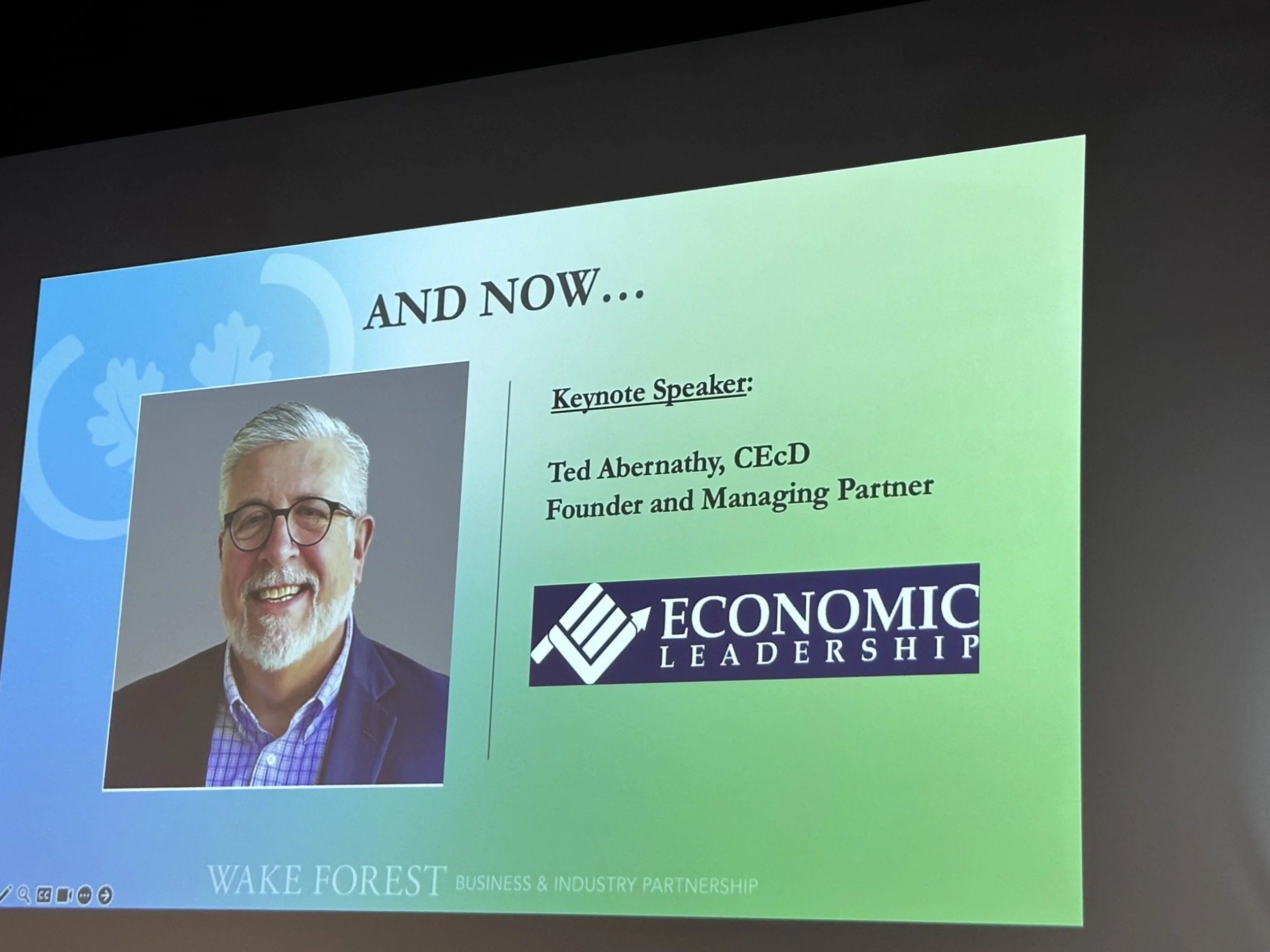
Keynote speaker Ted Abernathy, Founder and Managing Partner of Economic Leadership, returned for his sixth appearance at the Forum to share a timely economic outlook grounded in regional, national, and global perspectives. Known for translating complex economic and geopolitical trends into clear, practical insight, Abernathy presented key data highlighting North Carolina’s strong competitive position and the Triangle’s continued momentum:
Wake Forest employment up 53% over the past 10 years
Wake County holds the highest median home sale price in North Carolina at $474,088
North Carolina ranked #1 Best State for Business by CNBC
As the event came to a close, one message stood out clearly, as Jason Cannon stated, “Wake Forest is not growing by chance—it is shaping its future with intention. Through collaboration, thoughtful planning, and continued investment in people and place, our town remains focused on building a future defined by opportunity, progress, and shared success.”