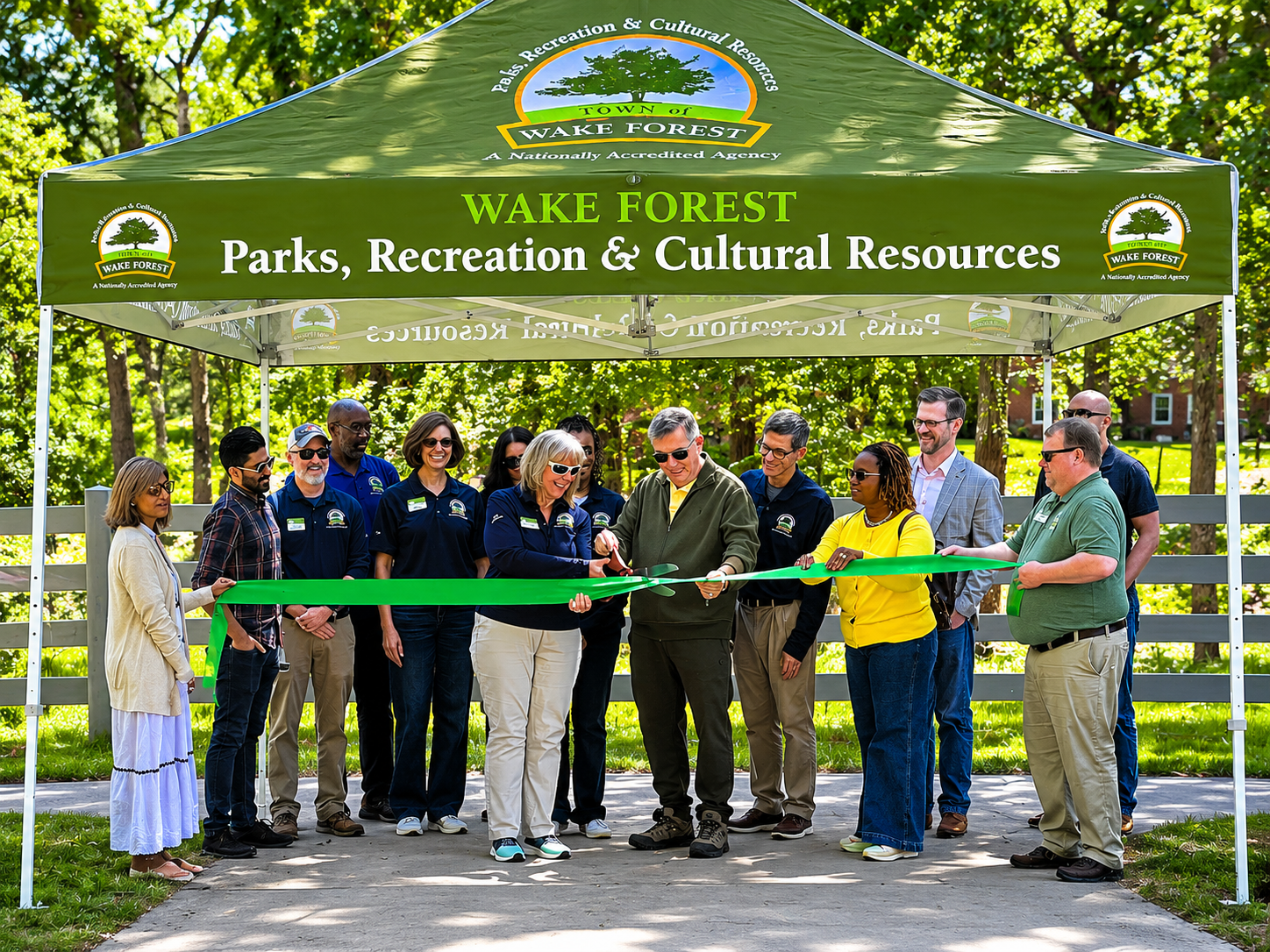
Wake Forest celebrated two major additions to its growing parks and greenway system on Friday, May 8, with ribbon-cutting ceremonies for Dunn Creek Greenway Phases 3 and 4 and the newly restored Miller Park.
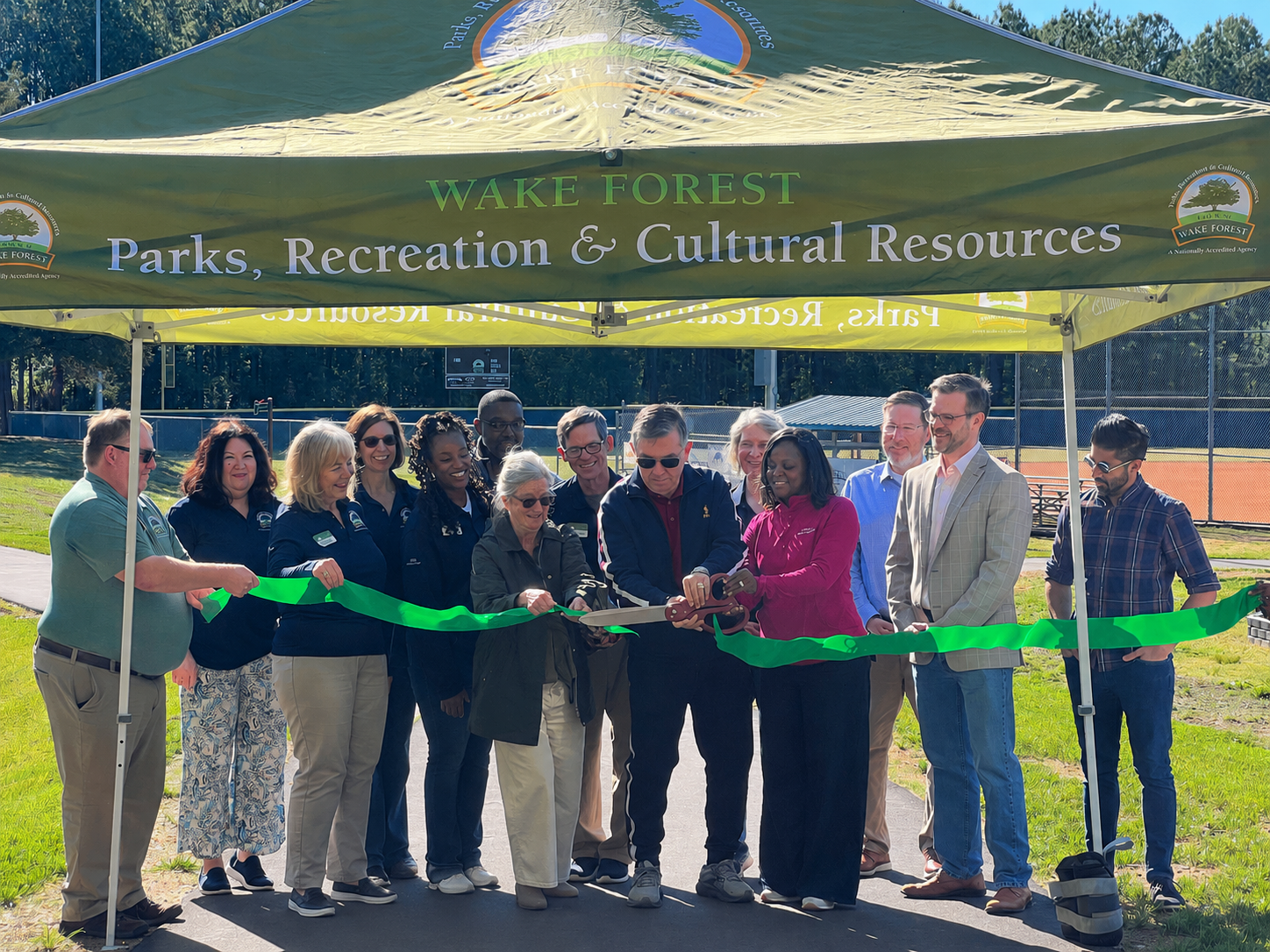
The celebration began Friday morning at Flaherty Park Playground, where community members gathered for the ribbon-cutting of Dunn Creek Greenway Phases 3 and 4. The newest additions to the Town’s greenway system expand connectivity between several Wake Forest neighborhoods. Later that morning, the celebration continued Downtown with the reopening of Miller Park, a transformed two-acre wooded park behind Town Hall.
For Steven Meyer, CIP Manager for the Town of Wake Forest, the goal of the Miller Park project was to improve the park’s infrastructure while protecting the natural setting residents have enjoyed for years.
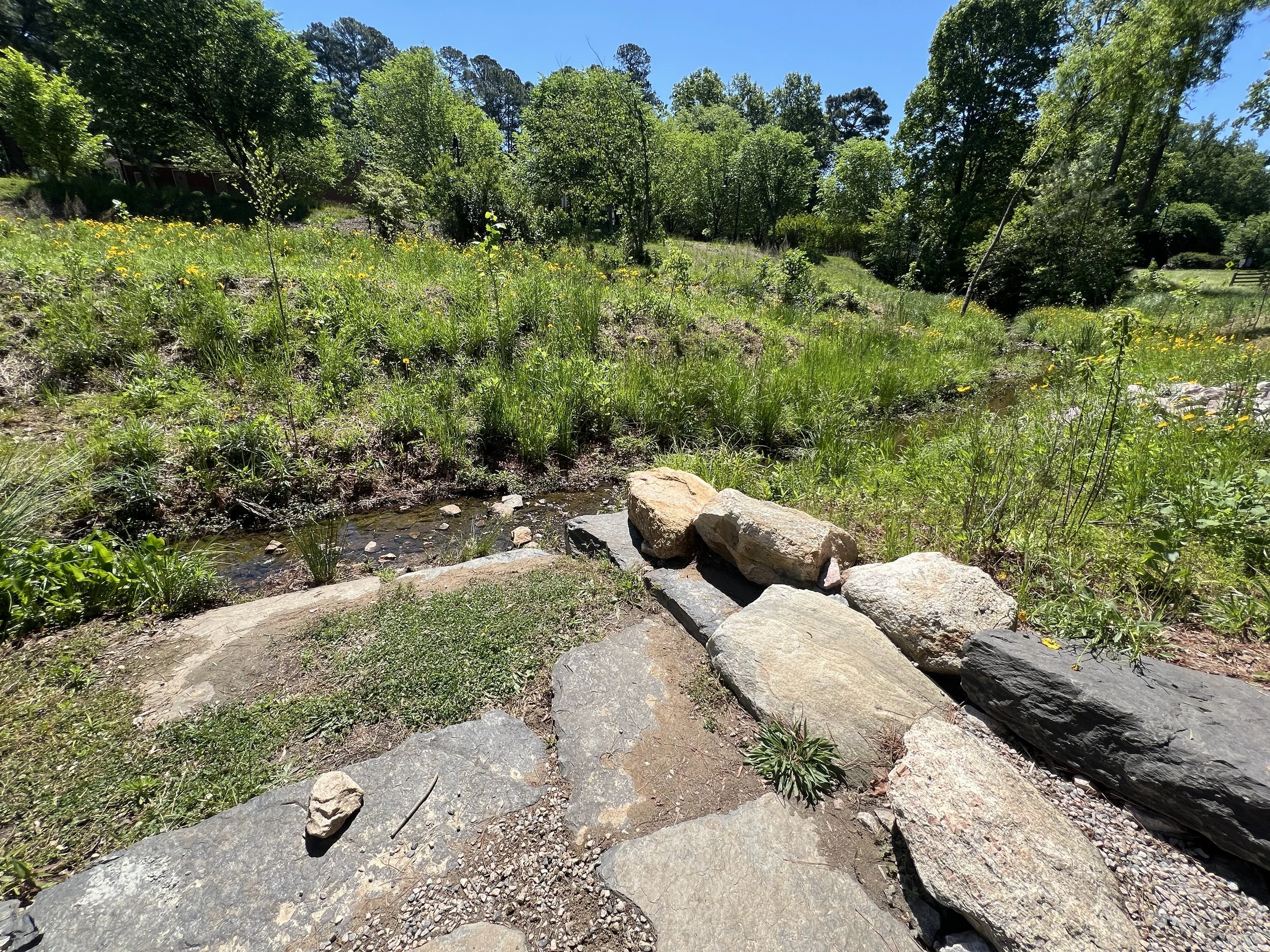
“One of the primary goals was to preserve Miller Park as a natural oasis in Downtown Wake Forest while addressing significant environmental and infrastructure issues,” Meyer said. “The Town wanted to stabilize the stream, improve pedestrian safety, enhance accessibility, and create stronger greenway connectivity without losing the character that makes the park unique.”
The Miller Park Upgrades & Stream Restoration Project addressed aging infrastructure, stream erosion, deteriorating trails, and safety concerns while improving water quality, drainage, accessibility, and pedestrian connections. Enhancements include upgraded trails, restored stream environments, new boardwalk features, landscaping, and improved greenway access.
Ruben Wall, Director of Parks, Recreation & Cultural Resources for the Town of Wake Forest, said projects like Dunn Creek Greenway and Miller Park directly support the Town’s broader focus on health, recreation, and community wellness. “Providing access to more greenways encourages citizens to be more active,” said Wall. “Increasing the walkability of the community benefits the overall health and wellness of the community as a whole.”
Wall added that Miller Park’s quiet atmosphere and natural beauty create a welcoming place for residents to recharge and enjoy time outdoors. “The aesthetics of the park are peaceful and calming,” Wall said. “This promotes emotional wellness for the citizens.”
Beyond recreation, Meyer noted that greenways and parks help strengthen connections throughout the community itself. “Greenways and parks serve as community connectors,” Meyer said. “These projects improve pedestrian mobility and help link neighborhoods, Downtown businesses, civic spaces, and recreational amenities together in a safe and accessible way.”
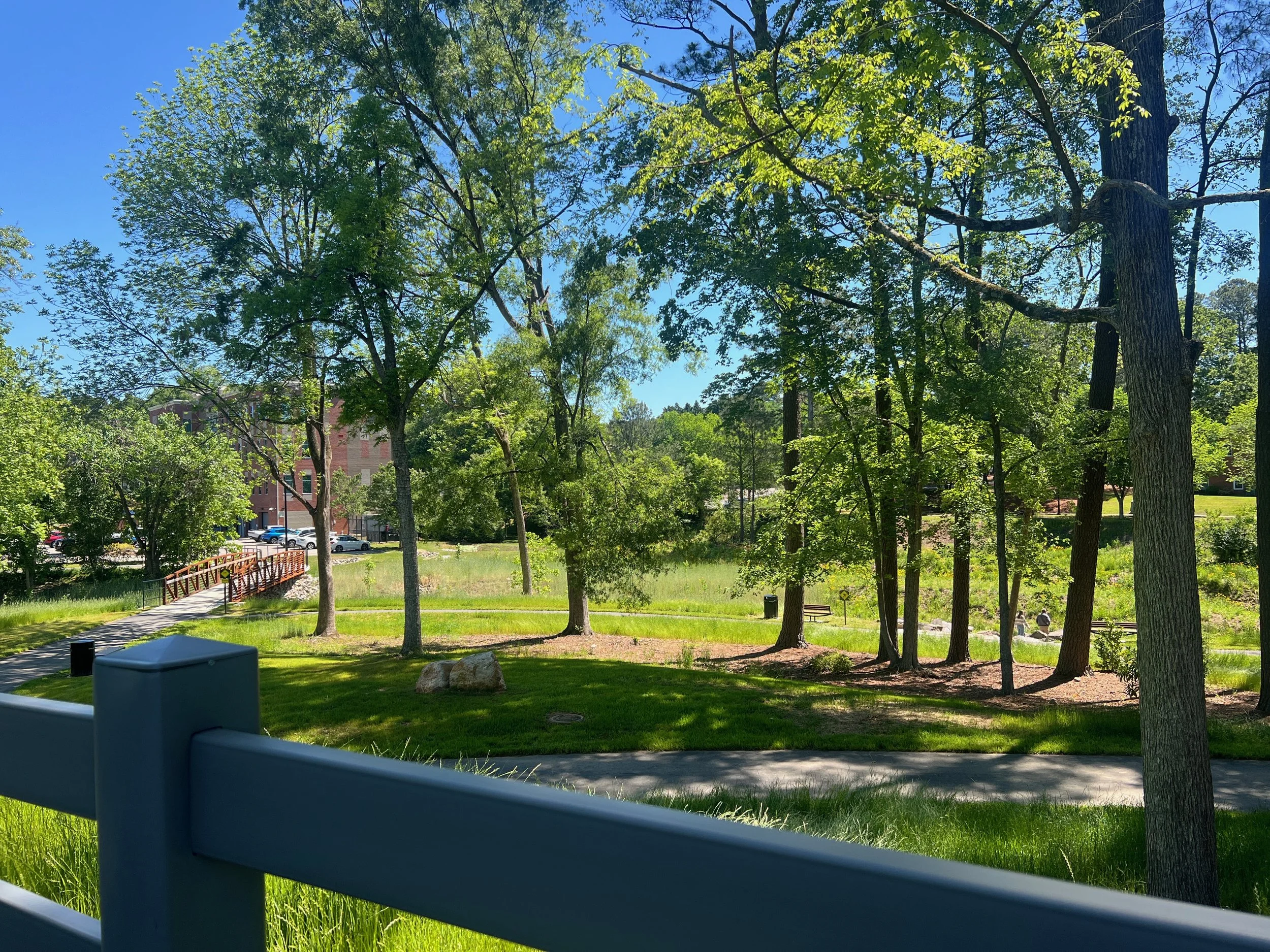
He also pointed to Miller Park’s role as a Downtown gathering space where residents and visitors can walk, relax, and connect with nature just steps away from local businesses and civic amenities.
Several longtime community advocates were recognized during the ceremonies, including Jan Ammons, Candace Davis, and former Mayor Vivian Jones. According to Wall, all three were early supporters of Wake Forest’s greenway initiatives and helped champion the vision years before construction began. “This project has been in development for many years, and these were some of the early advocates for greenway projects,” Wall said.
Jones, in particular, played a significant role in advancing the Town’s long-term greenway vision throughout her tenure. “Former Mayor Vivian Jones has been a long-time supporter of the greenways system-wide,” said Wall. “Working with the Board of Commissioners to approve funding was a key part of making this happen.”
The projects required extensive collaboration between Town departments, advisory boards, consultants, contractors, and community partners throughout the planning and construction process. Meyer credited the Engineering Department, Parks, Recreation & Cultural Resources Department, Stormwater staff, Communications team, Town leadership, and numerous project partners for helping bring the projects to completion.
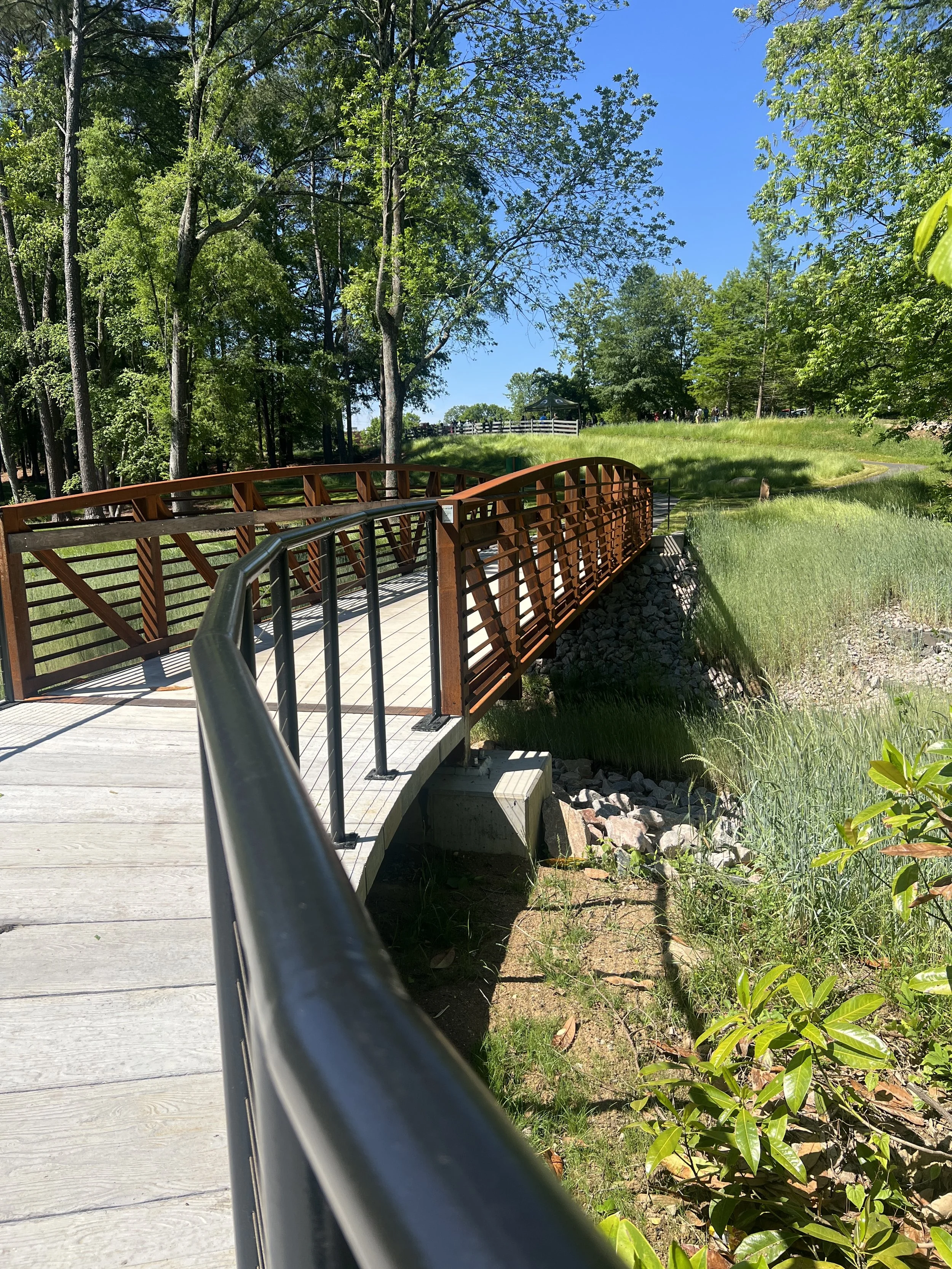
Community response leading up to the openings has been overwhelmingly positive. “The community support has been overwhelming,” Wall said. “The PRCR Advisory Board members advocated for many years for this.”
Jason Cannon, President of the Wake Forest Business & Industry Partnership (WFBIP), said investments in parks, trails, and greenways play an important role in supporting both quality of life and economic development throughout the community.
“Companies today are paying more attention than ever to the overall lifestyle and amenities a community offers,” Cannon said. “Projects like Dunn Creek Greenway and Miller Park help make Wake Forest an even more attractive place for businesses, residents, and visitors by creating spaces that encourage connection, wellness, and a strong sense of community. Miller Park in particular is a new jewel in the Town’s crown of recreation resources.”
As Wake Forest continues to grow, both Wall and Meyer see parks and greenways remaining central to preserving the quality of life residents value most. “By connecting our community, we foster a well-rounded, healthy, and safe place for the citizens of Wake Forest,” Wall said.
Meyer believes future investments will continue to focus on connectivity, accessibility, environmental stewardship, and linking neighborhoods, parks, schools, and Downtown areas. “The greenways and park system are intertwined,” Wall said. “As we continue, the goal is to connect parks and greenways systemwide.”